We Have Never Been Woke: The Cultural Contradictions of a New Elite
We Have Never Been Woke details how the language of social justice is increasingly used to justify this elite—and to portray the losers in the knowledge economy as deserving their lot because they think or say the “wrong” things about race, gender, and sexuality. Al-Gharbi’s point is not to accuse symbolic capitalists of hypocrisy or cynicism.
Rather, he examines how their genuine beliefs prevent them from recognizing how they contribute to social problems—or how their actions regularly provoke backlash against the social justice causes they champion.
The Burnout society
Our competitive, service-oriented societies are taking a toll on the late-modern individual. Rather than improving life, multitasking, "user-friendly" technology, and the culture of convenience are producing disorders that range from depression to attention deficit disorder to borderline personality disorder.
Byung-Chul Han interprets the spreading malaise as an inability to manage negative experiences in an age characterized by excessive positivity and the universal availability of people and goods. Stress and exhaustion are not just personal experiences, but social and historical phenomena as well. Denouncing a world in which every against-the-grain response can lead to further disempowerment, he draws on literature, philosophy, and the social and natural sciences to explore the stakes of sacrificing intermittent intellectual reflection for constant neural connection.

The Politics of Psychoanalysis
Psychoanalysis has had a profound influence on twentieth-century thought in a wide variety of areas, from psychology and psychiatry to sociology, literature, feminism and politics.
Most importantly, it offers insights into the relationship between individual subjectivity and social relations, making it a key discipline for understanding the links between social phenomena and personal experience.
The Alturistic Imagination
Social work and social policy in the United States have always had a complex and troubled relationship.
In The Altruistic Imagination, John H. Ehrenreich offers a critical interpretation of their intertwined histories, seeking to understand the problems that face these two vital institutions in American society.

Culture and Value
“It was Wittgenstein’s habit to record his thoughts in sequences of more or less closely related ‘remarks’ which he kept in notebooks throughout his life.
The editor of this collection has gone through these notebooks in order to select those ‘remarks’ which deal with Wittgenstein’s views about the less technical issues in his philosophy. So here we have Wittgenstein’s thoughts about religion, music, architecture, the nature of philosophy, the spirit of our times, genius, being Jewish, and so on. The work is a masterpiece by a mastermind.”—Leonard Linsky

Gender Without Identity
Gender Without Identity offers an innovative and at times unsettling theory of gender formation. Rooted in the metapsychology of Jean Laplanche and in conversation with bold work in queer and trans studies, Avgi Saketopoulou and Ann Pellegrini jettison “core gender identity”
…to propose, instead, that gender is something all subjects acquire -- and that trauma sometimes has a share in that acquisition.
Conceptualizing trauma alongside diverse genders and sexualities is thus not about invalidating transness and queerness, but about illuminating their textures to enable their flourishing.

Selling Social Justice: Why the Rich Love Antiracism
Selling Social Justice: Why the Rich Love Antiracism investigates the rise and spread of contemporary antiracist ideology and shows how the rich came to embrace this particular form of justice.
In this provocative and thoroughly researched account, Jennifer C. Pan explores why, in a twenty-first-century economy of increasing scarcity, antiracism is the wrong frame for understanding and fighting inequality.
From Charity to EnterpriseThe Development of American Social Work in a Market Economy
How did social work evolve as a profession in the United States?
Stanley Wenocur and Michael Reisch examine the history of social work and provide a theoretical model of professionalization for analyzing its development. They offer a provocative view of American social work as an enterprise seeking exclusive control over the definition, production, and distribution of an essential commodition.

The Political ClinicPsychoanalysis and Social Change in the Twentieth Century
For decades, psychoanalysis has provided essential concepts and methodologies for critical theory and the humanities and social sciences. But it is also, inseparably, a clinical practice and technique for treatment. In what ways is clinical practice significant for critical thought? What conceptual resources does the clinic hold for us today?
Carolyn Laubender examines cases from Britain and its former colonies to show that clinical psychoanalytic practice constitutes a productive site for novel political thought, theorization, and action. She delves into the clinical work of some of the British Psychoanalytic Society’s most influential practitioners—including Anna Freud, Melanie Klein, Wulf Sachs, D. W. Winnicott, Thomas Main, and John Bowlby—exploring how they developed distinctive and politically salient practices. Laubender argues that these figures transformed the clinic into a laboratory for reimagining race, gender, sexuality, childhood, nation, and democracy.

Virtue hoarders The Case Against the professional-managerial class
"The Professional Managerial Class is a stratum of any complex capitalist society that is made up of credentialed elites who have influential positions in the creative professions and liberal industries, academia, government, journalists, the NGO and foundation world, and corporate America.
Does this sound too vague? They are white-collar salaried workers who had to get professional certification to do what they do. At the beginning of the 20th century in the United States, they made up a small part of the population and were a mediating class between workers who labored with their bodies in unspeakable conditions and the capitalists who owned factories, oil wells, mines, steel mills, etc. and who were known as robber barons. In 1900 in the U.S., there were many more family farms and small business owners.

Mad World The Politics of Mental Health
Her new book, “Mad World: The Politics of Mental Health,” released by Pluto Press, is a rigorous dissection of mental health as a profoundly political issue. In its pages, she situates our understanding of mental health within the larger constellations of capitalism, systemic racism, disability justice, and queer liberation, among other frameworks.
“Mad World” is a revolutionary manifesto, probing into the possibilities of empathic care and a reimagining of what we mean by mental well-being. Critics have lauded it as a “radical antidote” to the prevailing paradigms that dictate our attitudes toward mental health. It serves as an indispensable primer for those seeking to subvert the status quo in their respective fields.

On Giving Up
From acclaimed psychoanalyst Adam Phillips, a meditation on what we must give up to feel more alive.To give up or not to give up?
The question can feel inescapable but the answer is never simple. Giving up our supposed vices is one thing; giving up on life itself is quite another. One form of self-sacrifice feels positive, something to admire and aspire to, while the other is profoundly unsettling, if not actively undesirable.

Against DecolonisationTaking African Agency Seriously
Decolonisation has lost its way. Originally a struggle to escape the West’s direct political and economic control, it has become a catch-all idea, often for performing ‘morality’ or ‘authenticity’; it suffocates African thought and denies African agency.
Olúfẹ́mi Táíwò fiercely rejects the indiscriminate application of ‘decolonisation’ to everything from literature, language and philosophy to sociology, psychology and medicine. He argues that the decolonisation industry, obsessed with cataloguing wrongs, is seriously harming scholarship on and in Africa. He finds ‘decolonisation’ of culture intellectually unsound and wholly unrealistic, conflating modernity with coloniality, and groundlessly advocating an open-ended undoing of global society’s foundations.

Elite Capture How the Powerful Took Over Identity Politics (And Everything Else)
“Identity politics” is everywhere, polarizing discourse from the campaign trail to the classroom and amplifying antagonisms in the media, both online and off.
But the compulsively referenced phrase bears little resemblance to the concept as first introduced by the radical Black feminist Combahee River Collective.

Between Sanity and Madness: Mental Illness from Ancient Greece to the Neuroscientific Era
Between Sanity and Madness: Mental Illness from Ancient Greece to the Neuroscientific Era traces the extensive array of answers that various groups have provided to questions about the nature of mental illness and its boundaries with sanity.
Does this sound too vague? They are white-collar salaried workers who had to get professional certification to do what they do. At the beginning of the 20th century in the United States, they made up a small part of the population and were a mediating class between workers who labored with their bodies in unspeakable conditions and the capitalists who owned factories, oil wells, mines, steel mills, etc. and who were known as robber barons.
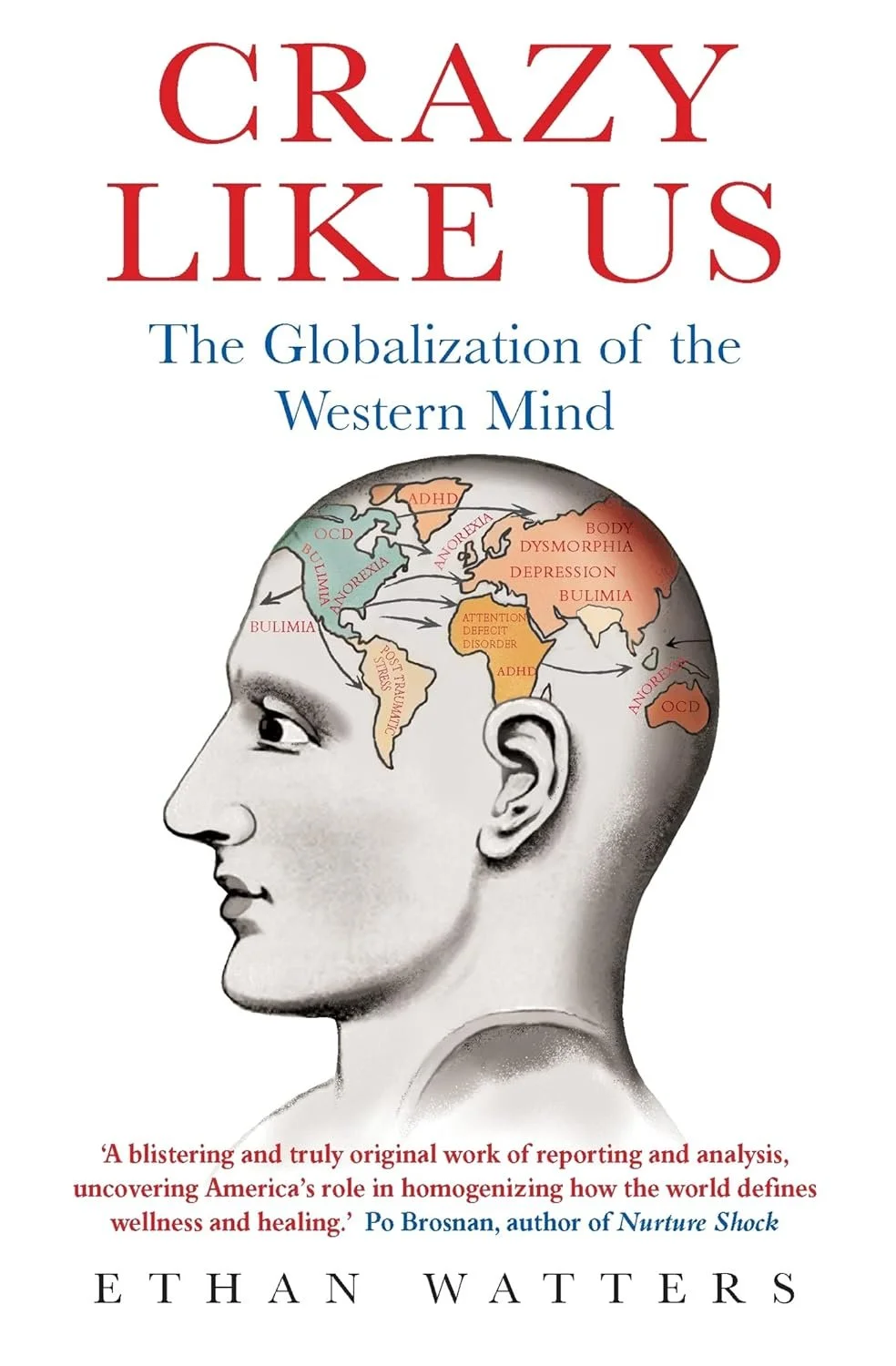
Crazy like us: the globalization of the American psyche
It is well known that American culture is a dominant force at home and abroad; our exportation of everything from movies to junk food is a well-documented phenomenon.
But is it possible America's most troubling impact on the globalizing world has yet to be accounted for? In Crazy Like Us, Ethan Watters reveals that the most devastating consequence of the spread of American culture has not been our golden arches or our bomb craters but our bulldozing of the human psyche itself.

The Protest PsychosisHow Schizophrenia Became a Black Disease
In The Protest Psychosis, psychiatrist and cultural critic Jonathan Metzl tells the shocking story of how schizophrenia became the diagnostic term overwhelmingly applied to African American protesters at Ionia-for political reasons as well as clinical ones.
Expertly sifting through a vast array of cultural documents, Metzl shows how associations between schizophrenia and blackness emerged during the tumultuous decades of the 1960s and 1970s-and he provides a cautionary tale of how anxieties about race continue to impact doctor-patient interactions in our seemingly postracial America.