A Commentary on Neuroscience And Psychoanalysis: The Brain or the Other/A

Neuroscience is among the most productive and influential sciences of our time. Its insights into brain function, plasticity, and neural correlates of behavior have transformed medicine, psychiatry, and our cultural vocabulary. Drawing on this influence, the present article seeks to delineate the field of psychoanalytic intervention.
Yet what is at stake in the neuroscientific enterprise extends beyond the laboratory. Every field of knowledge shapes how human affairs are understood, and neuroscience is no exception. Its research and growing public prominence have increasingly shaped contemporary discourse: people now speak of their brains as if they were autonomous agents. Brain imaging technologies, neuroscientific terminology, and the prestige of the field have profoundly influenced how we describe ourselves, our actions, and our capacities.
Deena Skolnick Weisberg et al.(2008) state:
Even irrelevant neuroscience information in an explanation of a psychological phenomenon may interfere with people's abilities to critically consider the underlying logic of this explanation. […] But subjects in the two nonexpert groups additionally judged that explanations with logically irrelevant neuroscience information were more satisfying than explanations without. The neuroscience information had a particularly striking effect on nonexperts' judgments of bad explanations, masking otherwise salient problems in these explanations.[1]
Neuroscience has impacted how we think about ourselves. In fact, it has impacted nearly all fields of knowledge, many of which have recently added the prefix "neuro" to their names. Beyond the "seductive allure" documented in research, neuroscience has influenced everyday language. People now refer to themselves through neural vocabulary: "my brain won't let me," "my brain is stuck on this," "I need to rewire my brain." As Vidal and Ortega (2017)[2] observe, this brain-talk carries authority; "my brain" is often more legitimized than "myself" in contemporary discourse. This is not inherently good nor bad; it reflects neuroscience's prestige and the cultural value given to its terminology. What matters for psychoanalysis is recognizing the logic this discourse operates within.
Another effect neuroscience has generated is its alignment with individualist tendencies in Western thought. Neuroscience studies brains, individual brains belonging to individual persons. This is methodologically sound for what the field investigates: individuals, each with their own brain. Each of us is understood as a self-enclosed individual, interacting with others, our brains responding to and shaping the outside world. This is a thought model, a way of organizing knowledge about human affairs. In this model, neurochemical processes in the brain shape someone's behavior and feelings while the brain is simultaneously shaped by external stimuli. Human affairs such as art, politics, family, hierarchy, and relationships exist between these processes. This is not a critique; it describes how neuroscience necessarily operates given its object of study.
Vidal and Ortega (2017) document how people refer to their brains. The authors ask: what do people mean when they talk about their brains? "Are they using merely figurative language, or do they mean to say that they are essentially their brains, that their identity and subjectivity can be somehow reduced to brain neurochemistry and processes? [...] They do not seem to believe that they are their brains alone. Yet they rely on brain language to talk about themselves. Why? One clear reason is that they live in an environment where neurotalk (if not always neuroscience itself) has become a major source and sign of legitimacy. My brain is more authorized 'to do it' than myself" (p. 268).
It is about legitimacy and value. In Lacanian terms, neuroscientific terminology finds value in the Other/A[3], which is the symbolic space of language, rules, and social norms that exists outside the individual, where signifiers circulate and acquire their meaning and authority. Words like "brain," "neurochemistry," "brain imaging," and "brain training" carry weight in contemporary discourse because they draw on this legitimacy.
Neuroscience sits comfortably with individualistic notions, which means it can align intentionally or not with neoliberal frameworks that locate both problems and solutions within individuals. When neuroscientific findings are promoted irresponsibly, they reinforce the treatment of human distress in the same way neoliberalism handles public affairs, by focusing on the individual rather than on social, economic, or political conditions.
Neuroscience's effects align with individualistic notions: my brain, my disorder. The focus shifts away from broader conditions; demands for productivity, stagnant wages, the collapse of housing accessibility, political structures, and toward a malfunctioning brain, an individual unable to cope. This resonates with neoliberal logic, which positions each individual as the agent of their own social, economic, and personal capacities.
When mental disorders are reformulated as brain disorders, the individualistic thought model becomes even more pronounced. This is not to say neuroscience is ideologically motivated, but rather that its object of study, individual brains, naturally aligns with individualist frameworks.
Psychoanalysis should debate neuroscience where they intersect in their research, not because it claims neuroscience is wrong, but for two reasons: first, to justify a different clinical intervention; second, to avoid theoretical dismantling.
I have been researching the theoretical tension between neuroscience and Lacanian psychoanalysis, whereas adopting one framework can undermine the coherence of the other at the level of basic assumptions. While neuropsychoanalysis seeks reconciliation within Freud’s work, I focus here on the Lacanian perspective to clarify why psychoanalysis cannot adopt the neuroscientific thought model without compromising its own coherence.
I have been describing the thought model behind neuroscience. A thought model[4], as Elias(2001) describes it, refers to the fundamental epistemological assumptions(often unexamined) on which we base our thinking, reasoning, and analysis.
Thought models are historically and institutionally stabilized ways of organizing knowledge. They appear self-evident and guide both research and interpretation. In Bourdieu's sense, these thought models often function at the level of doxa, naturalizing particular systems of classification and rendering them unquestionable. Psychoanalysis and neuroscience are placed in relation to one another here, specifically to make visible the particularity and distinction of the thought models in which they are inscribed.
Insisting on Lacanian theory entails resisting the dominant models of thought that guide neuroscientific inquiry. This is not to suggest that these models are wrong or misguided; rather, I invoke them as a point of contrast with psychoanalytic inquiry. Neuroscientific research tends to establish a particular connection: brain–outside, outside–brain. The brain influences the outside, and the outside influences the brain. This is perfectly reasonable and has led to important paradigm shifts, such as the move from "hard-wired" fixed brain structures to brain plasticity (Tallis, 2011, p. 26).
What Psychoanalysis Posits is Something Different
Neuroscientists from Harvard Medical School have claimed they are able to "start building a detailed picture of how word meanings are represented in the brain" (Jamali et al., 2024).[5] They argue that neurons can distinguish and anticipate the most likely meanings. One research leader stated: "By being able to decode word meaning from the activities of small numbers of brain cells, it may be possible to predict, with a certain degree of granularity, what someone is listening to or thinking." Correlation, however, is not equivalence. Whether correlations can be found between neural activity and word meaning is a question for neuroscience itself.
Tallis (2011) invites us to think carefully about neuroscientific claims. He writes:
By studying the fine grain of the fMRI in this area when subjects are looking at lines with different orientations, Rees and colleagues were able to infer the orientation of the presented line with 85 per cent accuracy: in other words, they were able to work out what the subject was looking at. This, however, is a far cry from examining the experience of an entire object, of an entire scene, of a changing scene, or of the changing meaning of a scene, never mind complex segments of people’s lives as when, for example, they decide to take on a mortgage or fall in love. The claim that it is possible to look at a single fMRI image and see what the person is seeing, never mind what they are feeling, and how it fits into their day, or their life, is grossly overstating what can be achieved.
Furthermore, Tallis (2011) argues that the brain is a necessary but not sufficient condition for human experience. He cautions against claiming that persons are simply their brains. From a Lacanian psychoanalytic perspective, human capacities cannot be reduced to processes confined within the brain and subsequently experienced by the individual. Tallis does not oppose neuroscience or biology, but instead critically exposes their limits. In the current prominence of neuroscience, this becomes essential for the relevance of psychoanalysis.
In contrast to locating meaning in neurons, psychoanalysis posits that we are beings of language. This operates as a methodological cut. Sadness, for example, is not something in itself. It is treated only in relation to something else, and this relation is observable in language, not as an isolated entity. This is the psychoanalytic theory of the signifier, which becomes powerful when applied to its proper object.
Psychoanalysis offers an alternative to an open question: are persons their brains? This distinction is essential; it is not an alternative to a closed question. Psychoanalysis offers a way of thinking about what we do not know for certain. For example, is a depressed person simply a depressed brain? An alternative position is that humans are beings of language. The psychoanalytic hypothesis is that the one who comes to speak knows something about their suffering—a not-known knowledge, knowledge that is not immediately accessible.
Consider the sentence: "I feel like I'm always sad; I always make the wrong choices."
For the psychologist, this sentence may function as a placeholder for a mental state. For the philosopher, it may be heard as a call for wisdom. For the neuroscientifically informed professional, it may suggest reduced cortical activation. Each would follow their respective methods. For the analyst, however, this sentence means nothing by itself and nothing about a mental state. This is what Lacan means when he says that a signifier means nothing by itself and only functions in relation to other signifiers.
The analyst could begin by asking: Sad? What are the choices? Who said you are always wrong?.
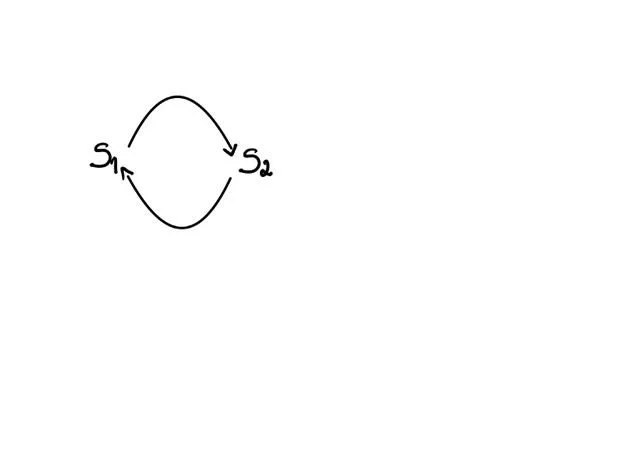
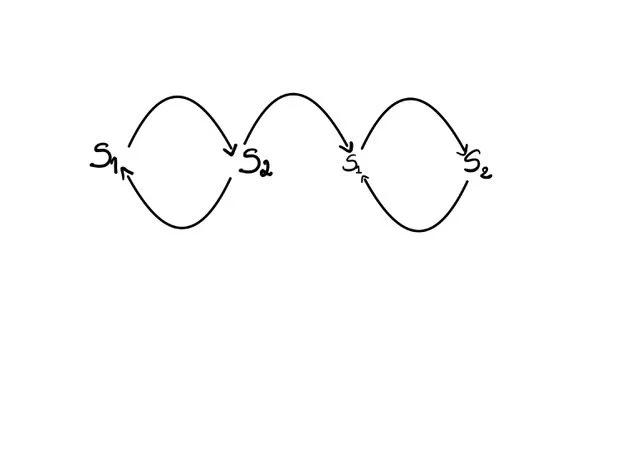
Through this possible intervention, the analyst helps construct what we call a signifying loop. It is the minimal operative element of analysis. It serves as an initial articulation, which is then retroactively modified as new signifiers emerge. From the first signifying loop, a second can appear, altering the meaning of the first.[6]
Responding to "Who said you are always wrong?", an analysand might say: "Well, if things are not going well for me, it's because I'm wrong."
What was initially "I feel like I'm always sad; I always make the wrong choices" becomes "I'm always wrong because things are not going well." The analyst may then ask what is not going well. This may lead to: "I'm a guitar player, and I still don't know if I'm good or bad. Nobody ever invites me to join a band.”
The analyst could ask why joining a band would determine whether someone is a good or bad guitarist. An answer such as "Since the moment I started playing locked in my room, I wanted to join a band" may follow. At this point, the analyst poses another question: Why were you locked in your room?
"Well, in my house, playing guitar was not exactly a sign of a successful life."
Did anyone tell you that?
"Yes. My father and my sister both thought it would never go anywhere. My father told me to choose a career in engineering."
Did you choose engineering?
"Yes, I did. And I stayed there for a long time, thinking it was the right choice."
And now?
"Now I play guitar, but it's financially unstable, and it worries me."
So who says you make the wrong choices?
This is not a guide, but an attempt to make visible why Lacan insisted that in psychoanalysis, there is always a question of who said it. The intervention aims at making a second scene appear. Three things are worth noting in this illustration. First, there is something to be read in a clinical text. It is not the experience, but the structural relations between terms. Second, the analyst needs to select terms to elevate as signifiers. In this case, “sad” was “making wrong choices,” it was not “sad” as we would think of outside the psychoanalytical device. It disappeared from the apparent signifying chain. It does not mean that I could not come back or that it is not hidden. Third, the intervention intends to suspend the certainty so that the Imixing of Otherness can be read and interpreted.
This illustration clarifies the psychoanalytical wager: symptoms, when in place, have a meaning[7], and when correctly interpreted, they provide the conditions for the analysand to let go of a part of it, as Lacan writes. To let go of a piece of it means being able to interpret one’s question from the place of the Other. Here lies a decisive difference: signifiers come from the Other/A not from the brain.
“If Freud brought anything, it is this: that symptoms have a meaning, and a meaning that is only correctly interpreted, ‘correctly’ meaning that the subject lets go of a piece of it in relation to their earliest experiences […]” (Lacan, Conférence à Genève sur le symptôme, 4 October 1975).
On the brain or The Other/A
The key concept that justifies this approach is inmixing (Lacan's immixtion). It refers to a structural entanglement between elements, more precisely, the inmixing of subjects and the inmixing of Otherness. Lacan formalizes this with specific notations to orient theory and practice.
Inmixing sustains a central psychoanalytic question: who or what is speaking? This approach finds support in Elias's (2001) diagnosis. In The Society of Individuals, he writes: "The relation between people is often imagined like that between billiard balls: they collide and roll apart. But the interaction between people, the 'network phenomena' they produce are essentially different from the purely additive interactions of physical substances.”Elias, 2001, p. 24)
Psychoanalysis, as developed by Lacan, is oriented toward the Other/A. The Other is not an individual but a logical and structural concept: the locus of language, the treasure of signifiers. What is said does not belong privately to the speaker. No one owns "sadness"; its meaning is determined in each specific case. The Other/A is always the language in which one speaks. This article is written in English, from an English-speaking A, where signifiers are available both universally and particularly to readers.[8] New questions then emerge: was is it about sadness? Who was sad? The speaker, the father, the sister, or a different arrangement that allows for interpretation?
This marks the fundamental opposition explored here: “mental states” conceived as internal, brain-based entities versus affects understood as effects of language and discourse. Psychoanalysis does not operate with the supposedly pre-discursive. The analyst has access only to language.
Conclusion
What is psychoanalysis in the age of neuroscience? This is a question worth asking. The advancements of the field, as we have seen, produce certain effects, but these do not diminish its genuine findings. In light of neuroscience's prominence, psychoanalysis must find its place as it always has, by subverting dominant knowledge. It is my hope that this article will encourage critical reflection on the methods and frameworks through which psychoanalysis is researched and developed, in ways that resist subsumption under neuroscientific frameworks or individualistic paradigms.
Whereas neuroscience investigates neural correlates and frequently reduces linguistic articulations to brain processes, psychoanalysis engages directly with language and the discursive order, offering a non-cerebralizing and non-individualistic approach to subjectivity. Psychoanalysis works with language itself, with discursive reality, providing a non-cerebralizing and non-individualistic approach. While neuroscience corroborates dominant thought models, psychoanalysis proposes an alternative model. It is not a question of one being superior to the other; rather, we should consider which approach more adequately addresses specific questions. In psychoanalysis, the only brain of interest is one that has become a signifier: the body containing a brain is not ontologically prior to language, but emerges within it. The clinical text is constructed between analysand and analyst, and through it, the unconscious is put into motion. The brain correlates; psychoanalysis interprets. One works with neurobiochemistry, the other with a subject in language, where the universality of politics, economy, gender, and identity finds its particular articulation in each case.
REFERENCES
Eidelsztein, A. (2000). La topología en la clínica psicoanalítica (1st ed.). Letra Viva. (Original work published in Spanish)
Eidelsztein, A. (2022). No hay sustancia corporal: Controversias sobre el cuerpo, la sociedad y el psicoanálisis. Letra Viva. (Original work published in Spanish)
Jamali, M., Grannan, B., Cai, J., Khanna, A. R., Muñoz, W., Caprara, I., Paulk, A. C., Cash, S. S., Fedorenko, E., & Williams, Z. M. (2024). Semantic encoding during language comprehension at single-cell resolution.
Lacan, J. (1966, October 21). Of structure as an inmixing of an otherness prerequisite to any subject whatever [Conference presentation]. International Symposium of the Johns Hopkins Humanities Center, Baltimore, MD, United States. In R. Macksey & E. Donato (Eds.), The languages of criticism and the sciences of man: The structuralist controversy (pp. 186–195). Johns Hopkins University Press.
Lacan, J. (1961-1962). The seminar of Jacques Lacan, Book IX: Identification (Author’s trans., p. 167). French transcripts available at http://staferla.free.fr
Lacan, J. (1957, May 31). Interview with L’Express. https://ecole-lacanienne.net/en/bibliolacan/pas-tout-lacan-2/
Skolnick Weisberg, D., Keil, F., Goodstein, J., Rawson, E., & Gray, J. (2008). The seductive allure of neuroscience explanations. Journal of Cognitive Neuroscience, 20(3), 470–477. https://doi.org/10.1162/jocn.2008.20040
Society, T. of I. (2001). The society of individuals (p. 24). Continuum International Publishing Group.
Vidal, F., & Ortega, F. (2017). Being brains: Making the cerebral subject. Fordham University Press.
[1] See Deena Skolnick Weisberg et al., “The Seductive Allure of Neuroscience Explanations,” Journal of Cognitive Neuroscience 20, no. 3 (2008): 470–477.
[2] Vidal, F., & Ortega, F. (2017). Being brains: Making the cerebral subject. Fordham University Press.
[3] Following Lacanian algebra, I distinguish between the Other and A. The Other refers to the historical and embodied dimension; A designates the locus or site of the battery, treasure, swarm, and set of signifiers. (See Eidelsztein, 2022)
[4] See The Society of Individuals (New York: The Continuum International Publishing Group Inc, 2001), 24.
[5] Semantic encoding during language comprehension at single-cell resolution Mohsen Jamali, Benjamin Grannan, Jing Cai, Arjun R. Khanna, William Muñoz, Irene Caprara, Angelique C. Paulk, Sydney S. Cash, Evelina Fedorenko & Ziv M. Williams. Nature volume 631, pages610–616 (2024)
[6] See Eidelsztein, Alfredo. La topología en la clínica psicoanalítica. 1st ed. Buenos Aires: Letra Viva, 2000.
[7] See Interview with L’Express. https://ecole-lacanienne.net/en/bibliolacan/pas-tout-lacan-2/
[8] See Jacques Lacan, Of Structure as an Inmixing of an Otherness Prerequisite to Any Subject Whatever, communication at the International Symposium of the Johns Hopkins Humanities Center, Baltimore, US
March 9th, 2026
Signifying loop (minimal element)

Double loop (repetition/demand)